
Redesigning Critical Information Access for Healthcare Support
As a Business Analyst in GE's Digital Leadership Technology Program, I took initiative to redesign the dashboard for healthcare call center agents. Applied UX principles to discover opportunities, create hand-drawn solutions, and solve critical information architecture problem affecting 800,000+ annual calls. This enabled faster customer support during medical equipment emergencies across the globe.
Boston, Massachusetts, USA
1889
Aviation, Healthcare, Energy
$38.70 billion (2024)
53,000+
Challenge
Call center agents struggled with fragmented Salesforce dashboard during high-pressure customer interactions. Critical information scattered across multiple screens: customer priority status, device information, warranty coverage, and service context buried in secondary screens while frustrated customers waited with broken medical equipment causing extended downtimes.
Results
The redesigned app features a clean, clutter-free interface, making it easier for users to navigate and access essential features.
The improved onboarding process resulted in a 35% increase in new user adoption rates.
The addition of personalization and customization options enhanced user engagement, leading to a 25% increase in user retention rates.
20%
Reduction in after-call work
<1%
Agent error rate
800,000
Annual calls supported


Process
Multi-Country Research: I led a comprehensive user research effort across GE Healthcare’s global operations, conducting stakeholder interviews with agents and managers in the US, India, Hungary, and France. Screen recordings of live support sessions revealed that agents under pressure ignored large text blocks, making information architecture the primary barrier to efficiency.
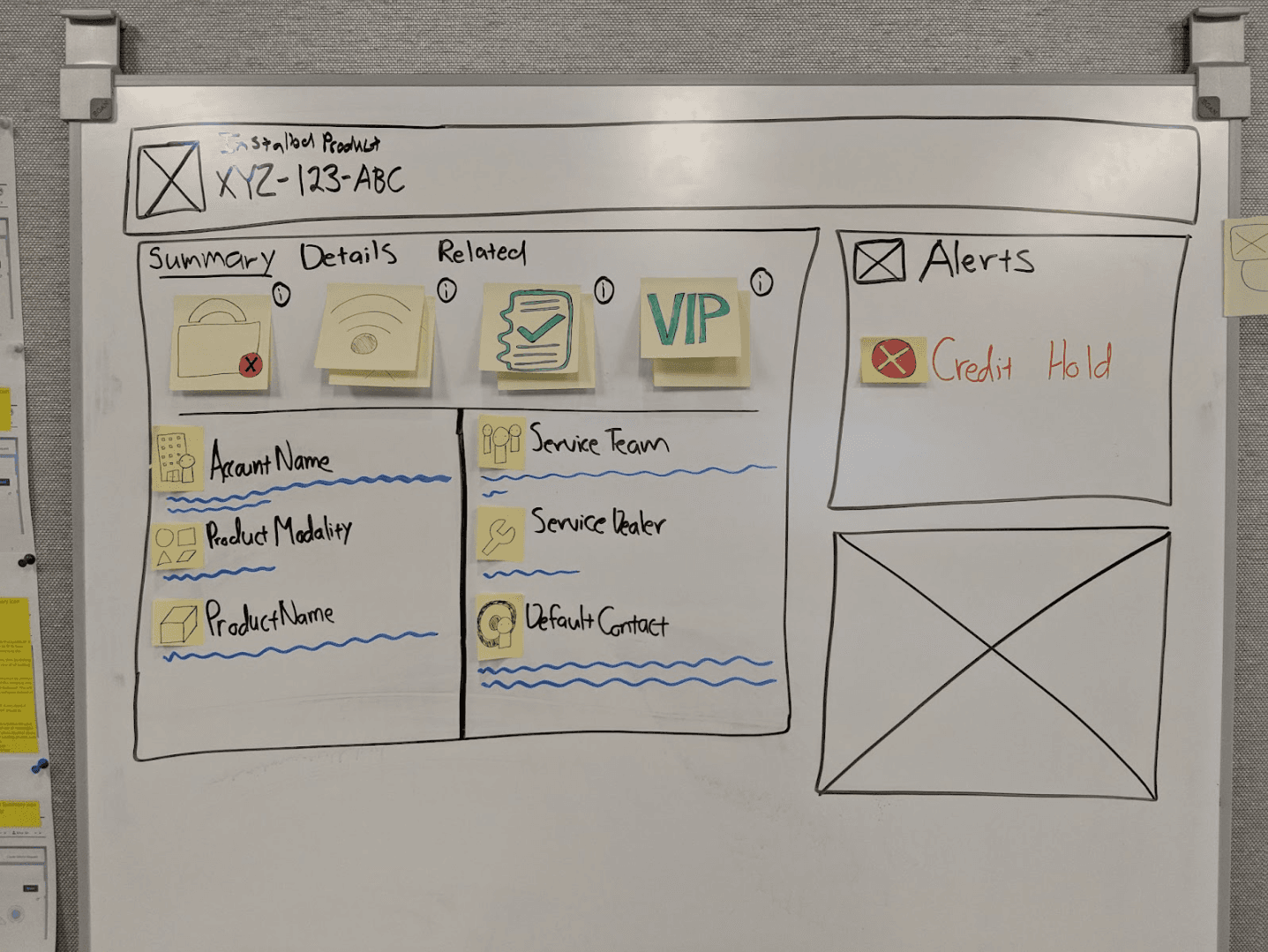
Collaborative Design & Validation: I facilitated physical whiteboarding workshops with global stakeholders to build consensus around a new information hierarchy. This iterative process ensured regional needs were met, and I conducted ongoing design validation to receive feedback like, "I like that the installed product number is easier to find."
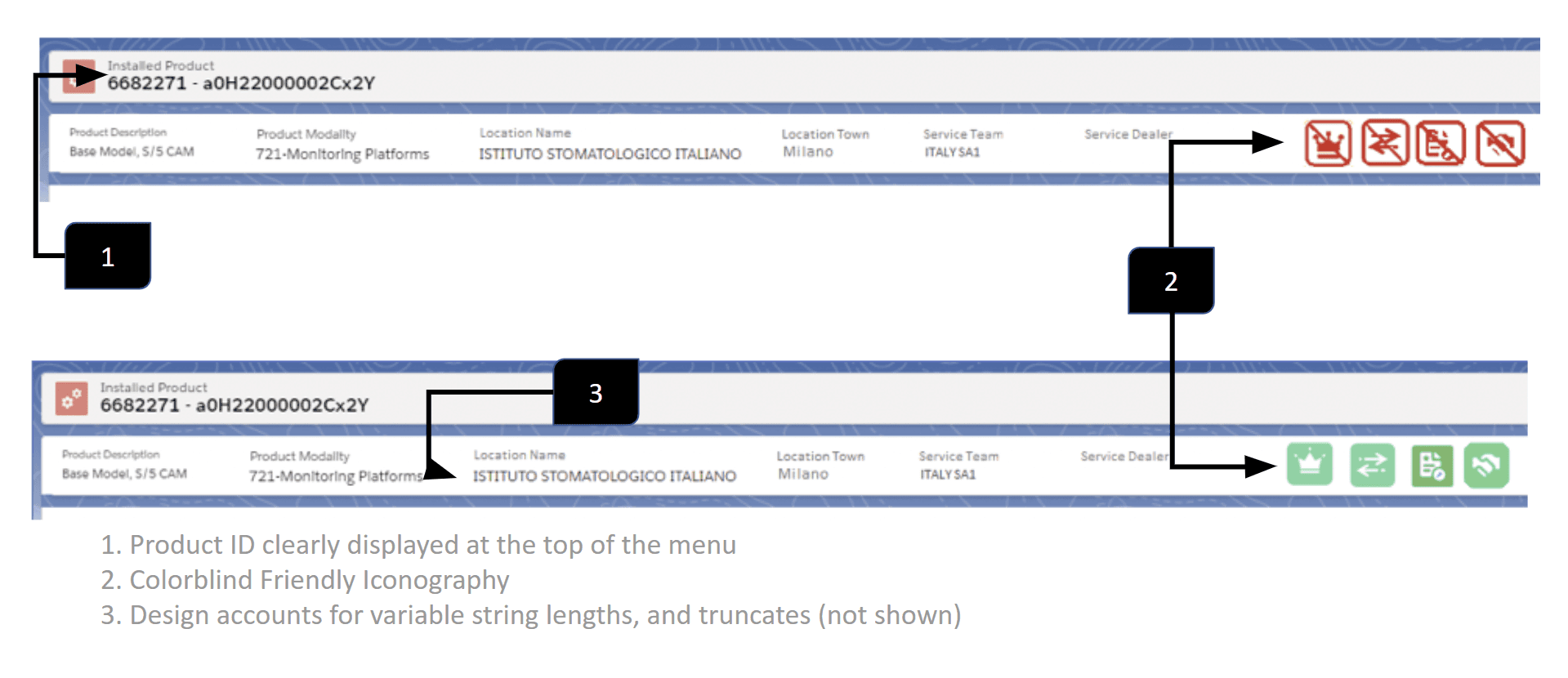
Inclusive Design Advocacy: When I identified potential colorblind accessibility issues with the status indicators, I successfully advocated for an inclusive design solution. The final design used both color and iconography to represent status, overcoming initial management resistance and ensuring the product was usable for a wider range of users.
The Solution
Information Architecture Redesign
I created a summary-first dashboard design that surfaced the six most critical pieces of information at the top of the screen:
Customer Priority Status (VIP designation)
Account Name and contact details
Product Information (name and modality)
Device Connectivity Status
Warranty Coverage
Credit Hold Status
Dynamic Visual System
The solution featured four dynamic status icons that changed color and state based on real-time data, enabling rapid visual scanning during high-pressure calls. This system eliminated the need for agents to navigate through multiple Salesforce screens during initial customer interactions.
Accessibility Integration
Despite initial management skepticism, I incorporated colorblind-friendly design patterns using both color and iconography to ensure all agents could effectively use the system.
The Impact
Quantitative Results
Based on management assessment, the AgentX dashboard delivered:
20% reduction in after-call work through improved information access
<1% agent error rate by surfacing critical information upfront
Dramatic reduction in customer wait times during call transfers
800,000+ annual calls supported through the improved interface
Qualitative Impact
Reduced Agent Stress: Agents reported increased confidence when answering calls, knowing essential information was immediately visible
Improved Customer Experience: Faster access to device and account information reduced customer wait times during equipment emergencies
Enhanced Service Quality: Fewer errors and faster resolution times improved overall service ratings
Technical Achievement
Successfully delivered a responsive Salesforce dashboard that maintained design fidelity across different screen resolutions, overcoming platform constraints through strategic design decisions.
“David has done a great job working on the call center team, gathering requirements with multiple regions, guiding feature development, and designing solutions for new features…helping improve our product.”
Call Center Product Manager
Product Manager | GE
Conclusion
Key Learnings
Cross-Functional Leadership: This project taught me that UX impact isn't limited by job titles. By applying design thinking within a business analyst role, I delivered user-centered solutions that addressed real business problems.
Advocacy Under Pressure: Standing firm on accessibility requirements despite management pushback reinforced my commitment to inclusive design and taught me how to advocate for users even in challenging organizational contexts.
Implementation Partnership: Initially, developers delivered a solution that only worked at one browser resolution. This taught me the critical importance of maintaining design involvement throughout implementation and clearly communicating responsive design requirements.
Global Stakeholder Management: Coordinating feedback across four countries and multiple time zones developed my skills in building consensus around design decisions in complex organizational structures.
What I'd Do Differently
Advocate for user-centered approaches earlier in the project timeline
Take up more space in cross-functional discussions, leveraging design expertise more confidently
Reduce option paralysis by presenting fewer, more validated design directions to stakeholders
Establish clearer design review checkpoints throughout the development process
This rotation experience demonstrated that effective UX work can happen anywhere in an organization when someone takes initiative to understand users and advocate for their needs.
This project showcases my ability to identify UX problems, lead design solutions across global teams, and deliver measurable impact regardless of official role, while developing crucial skills in stakeholder management and cross-functional collaboration.