Generation Impact: Building a Volunteer Consultancy for Global Social Change
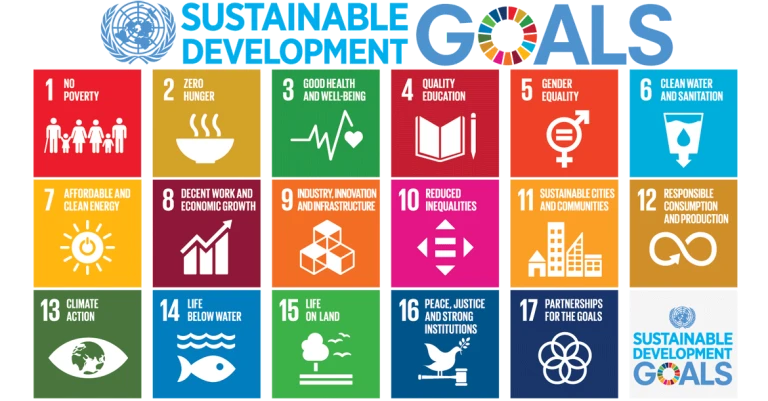
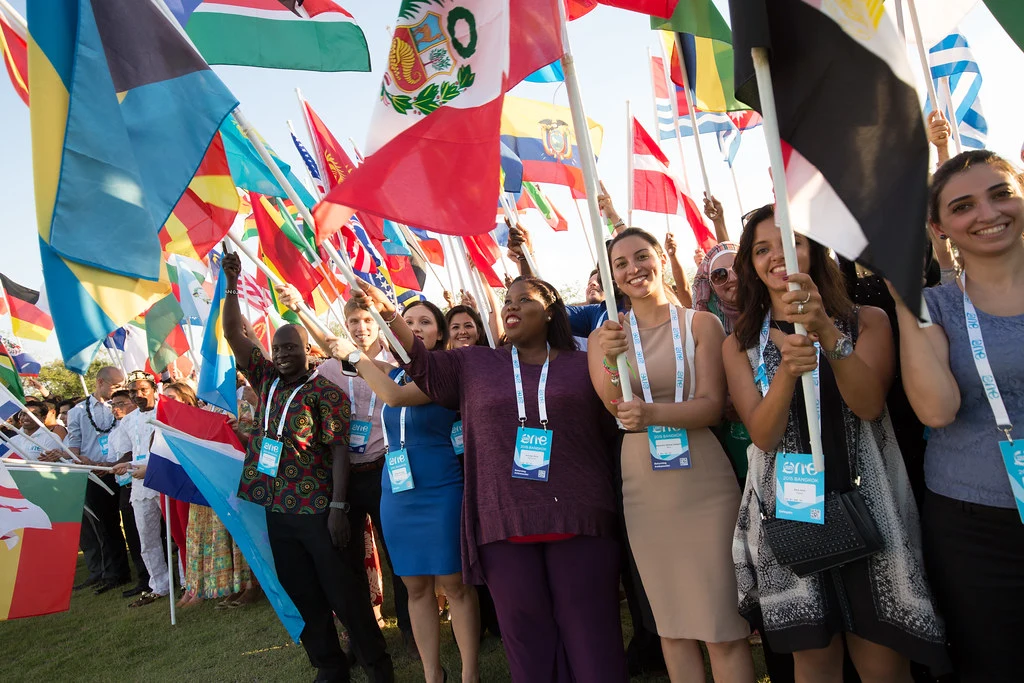
In 2018, a group of GE employees who attended the One Young World summit recognized a critical gap: skilled professionals wanted to contribute to social impact work, but lacked a structured way to connect their expertise with organizations addressing the UN's Sustainable Development Goals. We co-founded Generation Impact to bridge this gap, creating a volunteer consultancy that would match GE's global talent with nonprofits, social enterprises, and startups tackling the world's most pressing challenges.
Co-founder,
Sourcing Committee Chair
2018 - 2021
15 Committee Members,
+190 volunteer network
+10
+190
Challenge
Build a scalable organization that could source meaningful projects, vet partner organizations, match volunteers to appropriate work, and deliver measurable impact. All with zero budget and entirely volunteer labor.
Results
20+ projects completed, $400K+ in donated professional services, 12 of 17 UN Global Goals impacted
$400,000
Value delivered
+20
Project Completed
+190
Volunteer network created
My Role
As Co-founder and Sourcing Committee Chair, I shaped the organization's structure and drove its project pipeline:
Organizational Leadership:
Co-founded the organization in 2018 and formalized operations structure in 2019
Designed the 4-committee architecture (Sourcing, Resourcing, Communications, Outreach)
Created the 6-step project lifecycle process that became our operational framework
Scaled core team from 6 to 15 members while maintaining quality standards
Sourcing Committee Chair (2020-2021):
Led team of 3 project managers responsible for project pipeline and partner relationships
Personally vetted 11+ organizations including Catie's Closet, Kijenzi, Q2Q Health, CareMother, iNERDE, WatchRx, and others
Established sourcing criteria and vetting processes to ensure project quality and SDG alignment
Managed partnerships with GE Foundation, One Young World, Social Enterprise Greenhouse, and Agora Accelerator
Hands-On Project Contributor:
Led design and facilitation for Q2Q Health mobile app development
Contributed to SafeSurgery 2020 funding research and evaluation
Supported Kijenzi team in understanding business model for internal communications tool
The Challenge
Corporate employees wanted to leverage their professional skills for social good, but faced systemic barriers:
For Volunteers:
No clear pathway to find meaningful social impact projects
Difficulty identifying organizations where their specific skills could make a difference
Uncertainty about time commitment and scope of volunteer work
Limited ability to connect with like-minded professionals across global operations
For Social Impact Organizations:
Lack of access to skilled professionals (engineers, designers, marketers, analysts)
No budget to hire consultants for critical business needs
Need for short-term, project-based expertise rather than long-term commitments
Difficulty navigating corporate structures to find willing volunteers
For Us as Founders:
Building sustainable operations with zero budget and volunteer-only labor
Maintaining quality standards while scaling rapidly
Preventing volunteer burnout in a high-commitment organization
Measuring impact across diverse projects and sectors
Building the Organization
Organizational Architecture
I helped design a 4-committee structure that enabled scalable operations:
Sourcing Committee (My Leadership):
Maintained project backlog and partner relationships
Vetted incoming organizations for mission alignment and project feasibility
Scoped projects to ensure clear deliverables and timelines
Resourcing Committee:
Recruited and onboarded project members
Matched volunteers to projects based on skills and learning goals
Managed volunteer directory and conducted "get-to-know" sessions
Communications Committee:
Managed website, newsletters, and social media
Measured and reported project impact
Maintained stakeholder relationships
Outreach Committee:
Built community around UN Global Goals
Connected with GE Leadership Development Programs and One Young World delegates
Recruited new volunteers and Impact Ambassadors
The 6-Step Project Lifecycle
I contributed to designing our project lifecycle process that became the operational backbone:
Initial Contact: Projects sourced through GE Foundation, One Young World, incubator partnerships, and direct outreach
Refine Scope: Sourcing team works with stakeholders to define deliverables, timeline, and SDG alignment
Create Project Team: Resourcing team matches volunteers based on skills, availability, and learning goals
Launch Project: Sourcing facilitates kickoff meeting introducing team to stakeholders
Execute Project: Teams work on deliverables, share progress at quarterly updates
Deliver Impact: Final deliverables provided, feedback collected from all parties
My Sourcing Process
As Sourcing Chair, I developed a rigorous vetting process to ensure project quality and volunteer success:
Project Identification
I sourced projects through multiple channels:
GE Foundation partnerships: Leveraged existing relationships with nonprofits supported by GE's philanthropic arm
One Young World network: Connected with social entrepreneurs from global summit alumni
Incubator partnerships: Established ongoing pipelines with Social Enterprise Greenhouse and Agora Accelerator
Direct outreach: GE employees and external organizations submitted projects through our website
Vetting Criteria
For each potential project, I evaluated:
Mission Alignment:
Clear connection to UN Sustainable Development Goals
Social impact measurable through qualitative or quantitative metrics
Organization's track record and leadership credibility
Project Feasibility:
Deliverables scoped to 3-9 month timeline
Work could be completed remotely with 2-5 hours per week commitment
Clear success criteria and acceptance standards
Skills Match:
Project requirements matched available volunteer expertise
Appropriate complexity level for volunteer team
Opportunities for volunteers to learn new skills while delivering value
Stakeholder Readiness:
Organization had capacity to collaborate with volunteer team
Leadership availability for regular check-ins and feedback
Realistic expectations about volunteer constraints
Scope Refinement Process
Once a project passed initial vetting, I worked directly with stakeholders to refine scope:
Discovery Calls: 1-2 hour sessions understanding organization's mission, current state, and desired outcomes
Requirements Definition: Collaborative documentation of deliverables, timeline, and success metrics
Project Posting Creation: Detailed brief for Resourcing team to match appropriate volunteers
Stakeholder Alignment: Final review ensuring expectations were clear and achievable
Projects I sourced and Impact Delivered
Over three years, I personally vetted and launched 11+ projects that delivered measurable social impact:
Healthcare & Wellness
Q2Q Health (Led design and facilitation)
Mobile app preventing adverse drug events causing 150,000 annual US deaths
$18K in donated services, complete React Native prototype delivered
CareMother
Strategic partnership landscape for maternal health expansion in India, Bangladesh, Kenya
Profiles of 65+ potential partners across corporates, NGOs, hospitals, pharmacies
WatchRx
iOS app helping seniors manage complex medical regimens
Feasibility study and implementation plan for Apple platform migration
Education & Youth Development
iNERDE
Platform research for STEAM education across Africa
Cost/benefit analysis comparing existing solutions vs. custom development
Catie's Closet (Multiple projects)
Mobile app for donation tracking (147 first-time downloads)
Website redesign improving UX and fundraising capabilities
"Be Me" merchandising business plan
Supply chain optimization for national scaling
Climate & Sustainability
GE Renewables Carbon Neutral Program
Carbon emissions modeling methodology research
Complex-effort analysis identifying Onshore Wind as priority sector
Releaf (Multiple projects)
Factory app development improving productivity tracking
Heating bin optimization increasing capacity from 2 to 5 tons/hour
Economic Empowerment
Kijenzi (Multiple projects)
Business plan attracting new investors for medical device additive manufacturing in Kenya
Internal communications tool selection and implementation
Nanas y Amas
Marketing plan for "Loop" app connecting Venezuelan migrants with work
178% increase in new users, 219% increase in customers during project
Global Mentorship
Yunus and Youth
Mentor recruitment and pairing for social entrepreneurship fellows
8 mentors supporting 4 fellows in business development
Organizational Impact & Growth
Quantitative Achievements (2020-2021)
20+ projects completed across healthcare, education, climate, and economic development
$400K+ in professional services donated based on volunteer hours and market rates
196 volunteer members in Impact Generator network (55% growth from 2020)
52 volunteers engaged in 2021 projects alone
11 partner organizations supported across 6 countries and 4 continents
12 of 17 UN Global Goals directly impacted through project work
Qualitative Impact
Built sustainable infrastructure: Created replicable processes for sourcing, vetting, and executing projects
Developed volunteer talent: Provided opportunities for early-career professionals to build skills in areas outside their day jobs
Strengthened nonprofit capacity: Delivered business plans, technical solutions, and strategic guidance that organizations couldn't afford to purchase
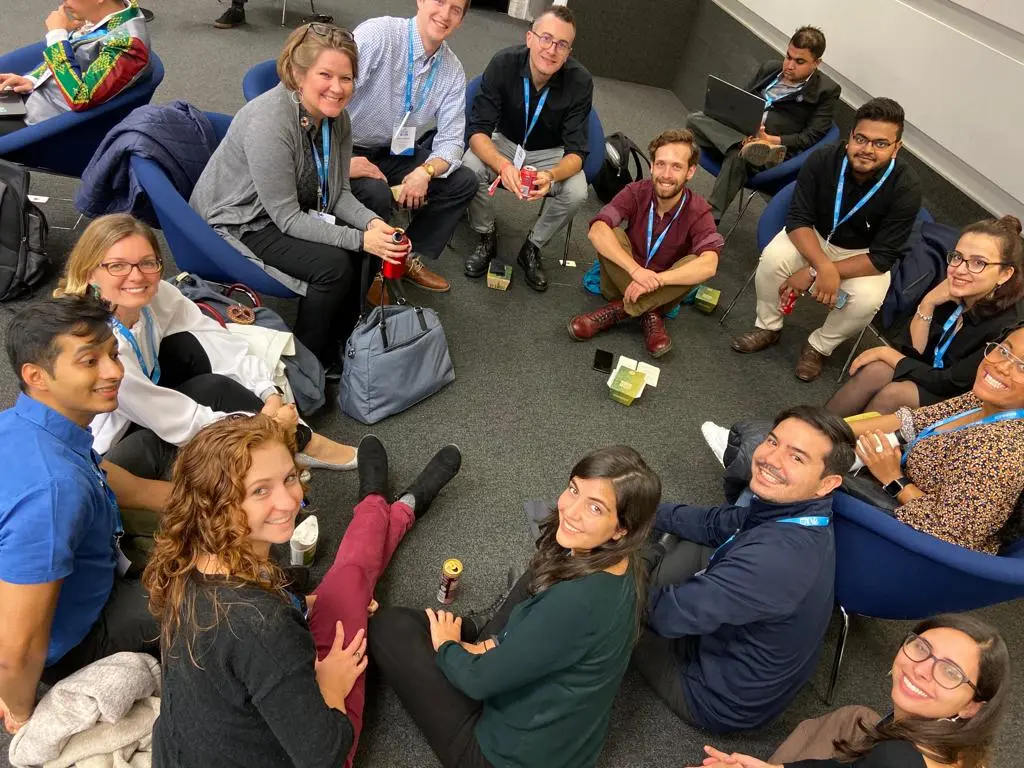
Created community: Connected like-minded professionals across GE businesses and geographies around shared values
Recognition & Partnerships
One Young World: Supported 19-person GE delegation application and onboarding
Social Enterprise Greenhouse: Sustained multi-year partnership pipeline
Agora Accelerator: Piloted partnership focusing on Latin American social ventures
Impact Ambassador Network: Grew to 26 ambassadors across 6 GE businesses and 7 countries
Challenges & Key Learnings
Organizational Sustainability
Challenge: Maintaining quality and volunteer engagement with zero budget and competing work priorities.
Learning: High standards require significant volunteer commitment. We learned to be selective about projects, ensuring each engagement delivered meaningful impact worth the volunteer investment. Monthly project lead check-ins helped identify issues early before they escalated.
Volunteer Coordination
Challenge: Coordinating global volunteers across time zones while managing stakeholder expectations about volunteer constraints.
Learning: Clear upfront communication about time commitment (2-5 hours/week), timeline (3-9 months), and deliverable scope prevented misalignment. Internal team kickoffs before external stakeholder meetings dramatically improved project success rates.
Project Scoping
Challenge: Some projects (SafeSurgery 2020, SafeWater) delivered excellent deliverables that were never implemented by partner organizations.
Learning: We refined vetting criteria to ensure deliverables were central to organizational priorities, not peripheral initiatives. Timing of projects relative to organizational funding cycles also impacted implementation success.
Organizational Maturity Matching
Challenge: Impact varied significantly based on partner organization maturity and capacity.
Learning: We developed an informal stratification system, matching highly-structured organizations with newer volunteers, while pairing early-stage startups with experienced volunteers who could navigate ambiguity.
The GE Spin-off
Challenge: In November 2021, GE announced it would split into three separate companies, making cross-business coordination increasingly difficult.
Learning: Even successful volunteer organizations require institutional support and infrastructure. Our high standards and workload, combined with the organizational upheaval, led us to pause new projects and ultimately wind down operations rather than compromise quality.
What I'd Do Differently
Stronger Change Management: When organizational members left due to GE attrition, we needed more robust succession planning and documentation to prevent knowledge loss.
Impact Measurement Framework: While we tracked volunteer hours and deliverables, we could have developed more sophisticated metrics for measuring long-term social impact of our projects.
Sustainability Planning: We should have anticipated the GE spin-off challenge earlier and explored options for organizational independence, potentially partnering with other corporations or creating a standalone nonprofit structure.
Stakeholder Implementation Support: For projects where deliverables weren't implemented, we could have offered lightweight implementation support or check-ins to ensure adoption rather than treating delivery as the endpoint.
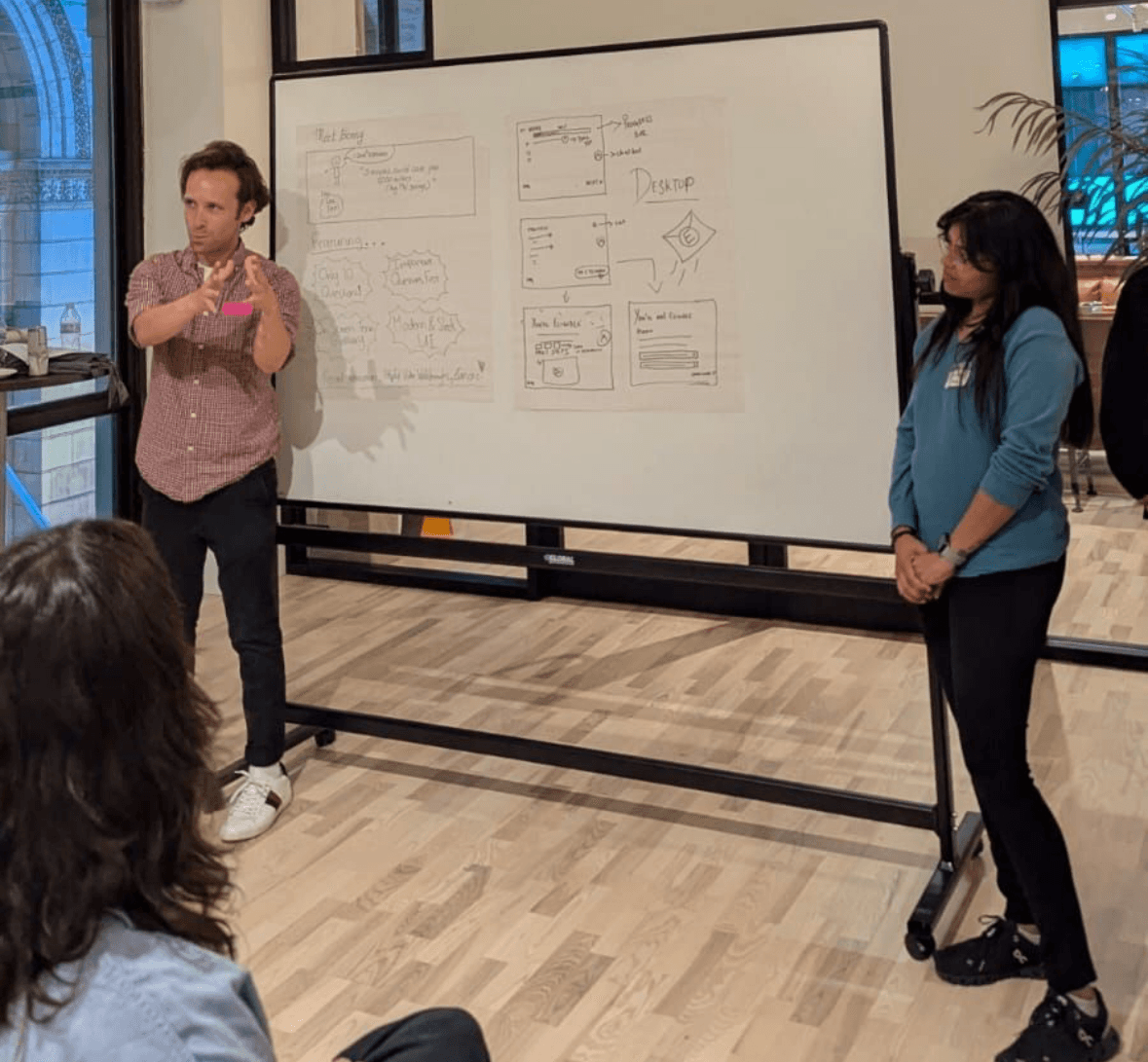
What This Experience Demonstrates
This project showcases skills beyond traditional UX design:
Organizational Design & Scaling: Built a volunteer consultancy from concept to 196-member organization with sustainable operations and measurable impact.
Cross-Functional Leadership: Led sourcing committee overseeing 3 project managers while collaborating with resourcing, communications, and outreach teams.
Stakeholder Management: Navigated complex relationships with nonprofits, social enterprises, corporate foundation, and global volunteer network.
Process Design: Created replicable sourcing and vetting processes that enabled quality control at scale.
Strategic Thinking: Balanced organizational growth with sustainability, volunteer development with stakeholder needs, and ambitious vision with practical constraints.
Social Impact Orientation: Demonstrated commitment to using professional skills for meaningful work addressing global challenges.
Generation Impact proved that motivated individuals can create meaningful change when given structure, support, and connection to purpose. While the organization ultimately wound down due to GE's corporate restructuring, the model we built, connecting skilled volunteers with social impact organizations through rigorous vetting and project management, delivered lasting value to partners and volunteers alike.