Research-Driven Redesign: Transforming Field Service Operations
Field engineers struggled with a decade-old system that hindered their ability to efficiently service critical medical equipment across hospitals worldwide. My client required comprehensive user-centered research to discover user pain-points. Through a combination of in-person ethnographic research, user interviews, and A/B testing, I succeeded in discovering user pain-points which drove our design decisions.
Role
Lead UX Researcher
Design System Architect
3 Years
Chicago, Illinois, USA
1994
Medical Technology
$19.74 billion (2024)
50,000+
Challenge
Deploy advanced user-research methodologies to discover and solve existing issues in complex healthcare environment. Replace an aging, insecure system with a modern, mobile-first solution. It must serve 8,000+ field engineers across the US, Asia, Europe, and Africa while maintaining strict FDA/EMA compliance in highly regulated healthcare environments.
Results
Eliminated data loss enabling confident work in any hospital environment, improved job satisfaction allowing focus on core expertise, enhanced compliance through modern security standards, and global scalability with design system accommodating multiple languages and regional requirements worldwide. Relevant KPIs include: +82% mobile adoption, +12 system critical features redesigned and delivered, implemented mobile first cross-platform design, praise from field users, unified user experience across global suite of 4 applications.
+8,000
Live field engineer users globally
82%
Mobile adoption across LATAM and EMEA regions
50%
Reduction in task completion time
My Role
I evolved from an individual contributor to the lead UX designer of a new product. My responsibilities included:
User Research Leadership: Conducted extensive field research including hospital shadowing and field engineering training across multiple countries.
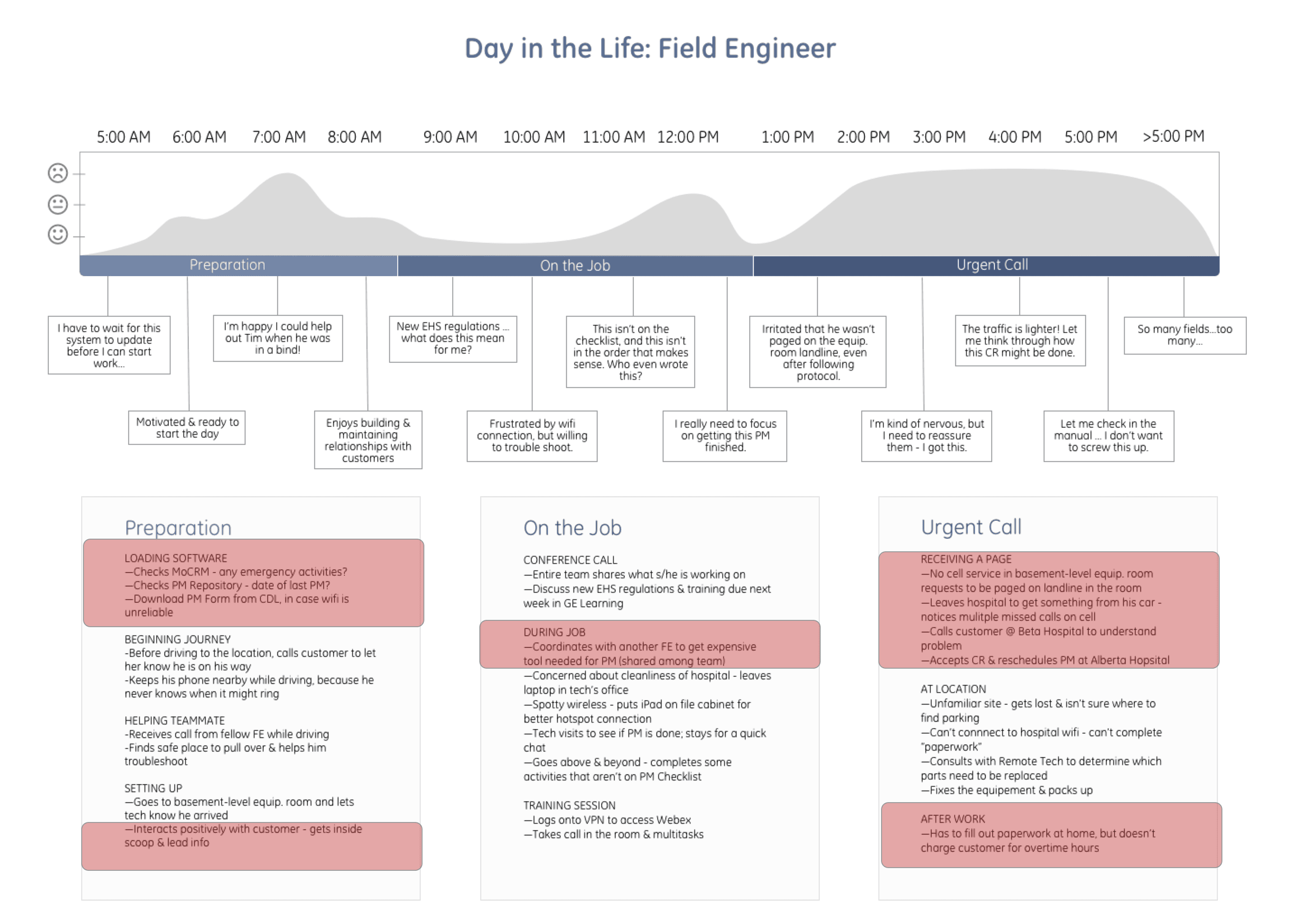
Research Synthesis: Translated field observations into personas, journey maps, and actionable design requirements.
Cross-functional Collaboration: Worked directly with product managers, developers, regional track leads, and business stakeholders across multiple continents.
Strategic Influence: Shaped product strategy through data-driven insights and user advocacy.
Validation & Testing: Established continuous testing frameworks with tri-weekly user sessions across global regions.
The Challenge
Field engineers were losing critical time and data due to fundamental system limitations:
Data Loss Crisis: Engineers lost work when transitioning between areas in hospitals, due to inconsistent Wi-Fi.
Mobile Adoption Barrier: Mobile adoption remained minimal despite field work being inherently mobile.
Operational Inefficiency: Unnecessary steps and outdated UX patterns doubled the time required to complete routine tasks.
Technical Debt: Cybersecurity vulnerabilities and end-of-life software created compliance risks in FDA-regulated environments.
Missing Functionality: Critical features were absent, forcing engineers to use external tools.
The Process
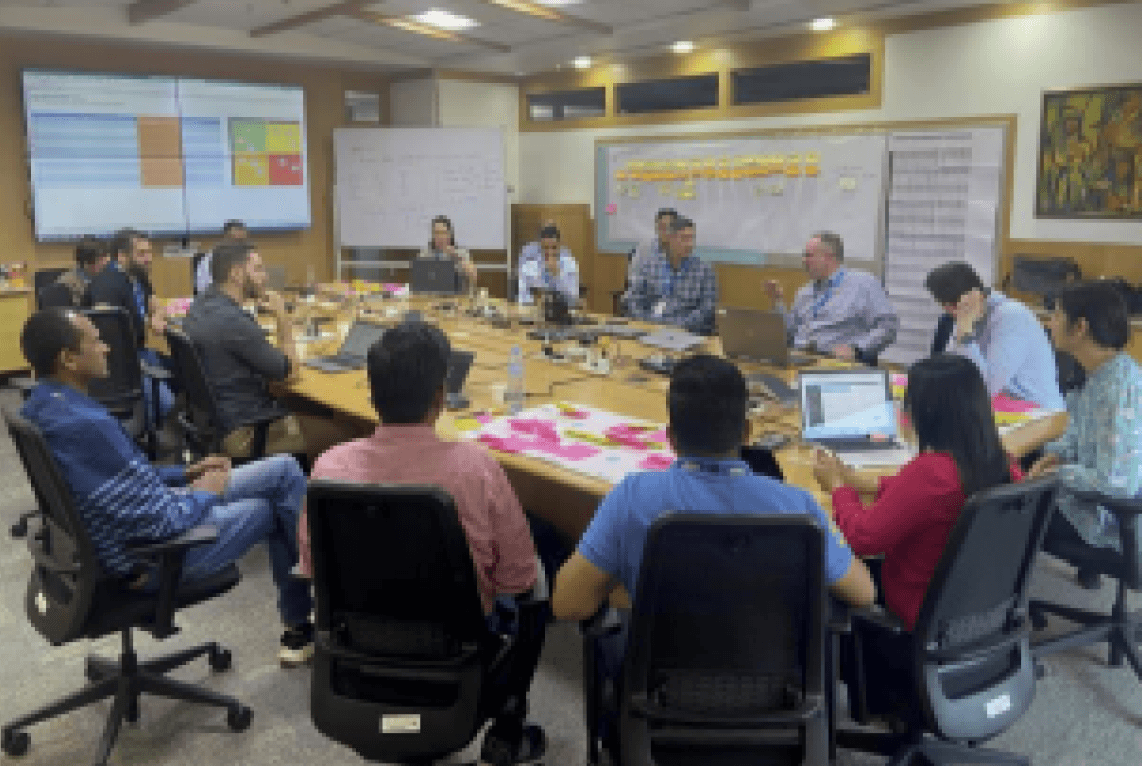
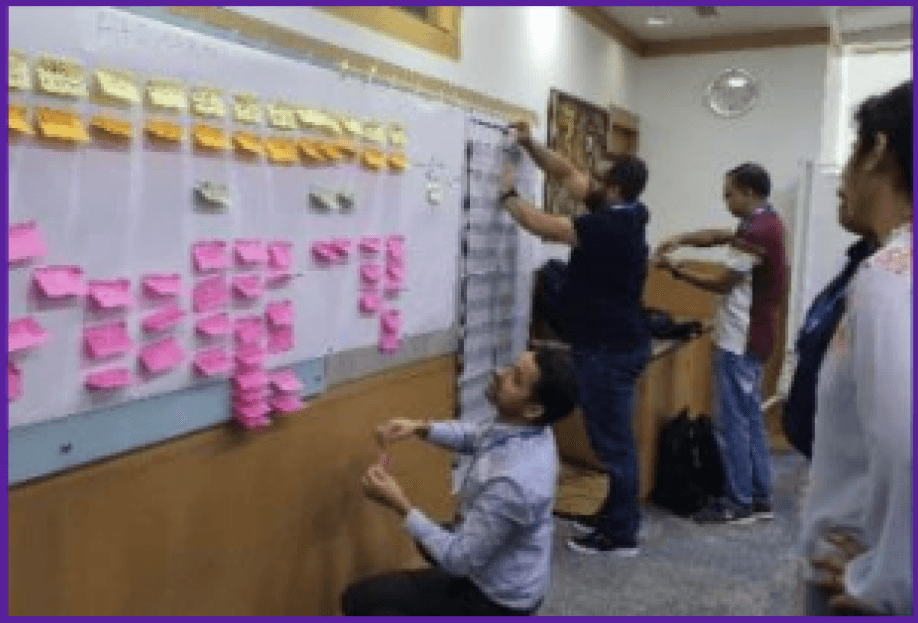
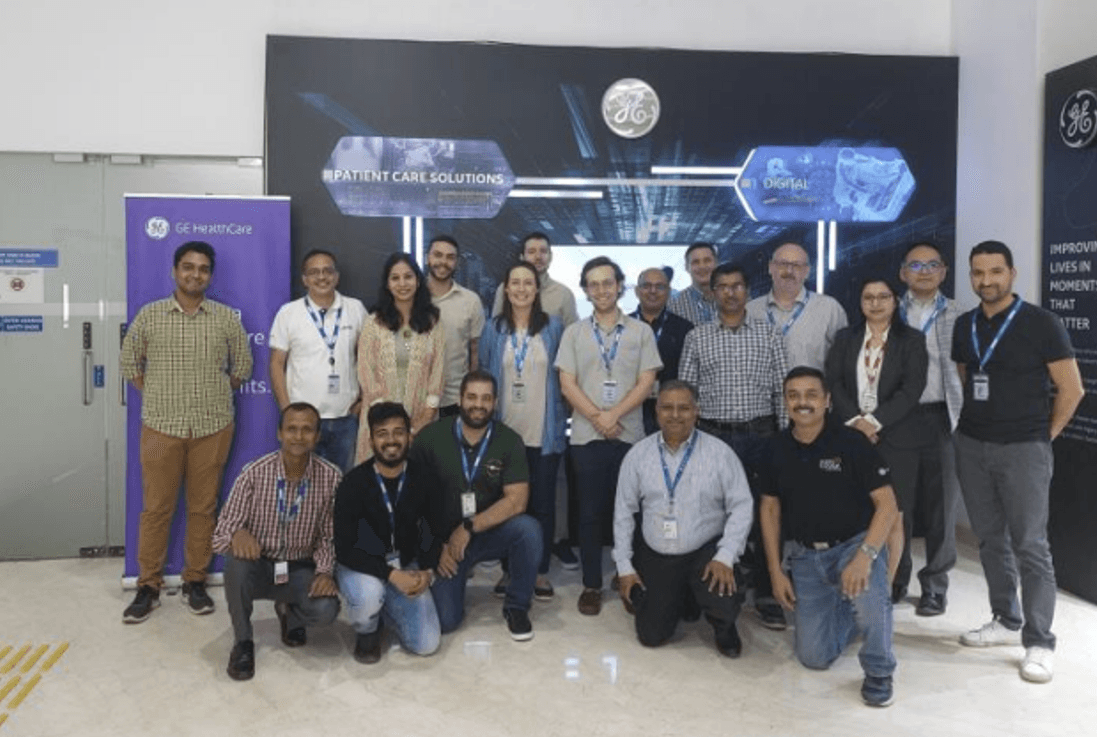
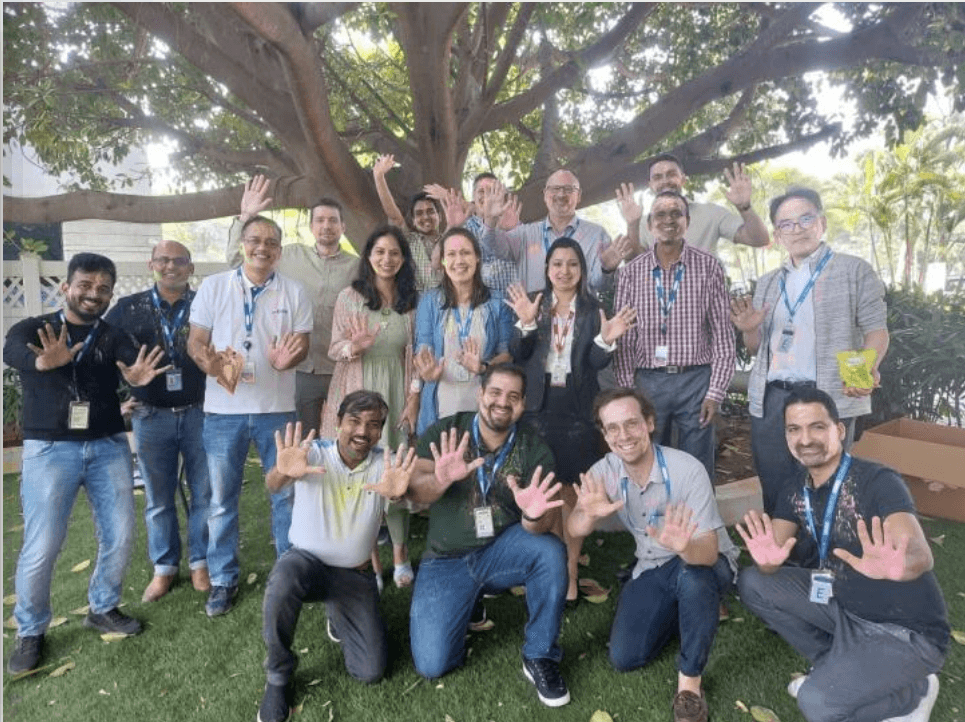
International Collaboration - India Kaizen Workshop
I traveled to India to help lead a Kaizen (continuous improvement) session with regional stakeholders.
Worked with stakeholders from multiple regions to improve user flows.
Shared design concepts with 15+ field engineering leaders and gathered immediate feedback.
Delivered a presentation on healthcare design accessibility.
Built relationships with regional track leads that informed ongoing design decisions.
Received recognition award from field engineering leadership for attention to user experience.
Embedded User Research
I immersed myself in the field engineers' world through multiple research methods, recognizing that desk research alone couldn't capture the complexity of their work environment.
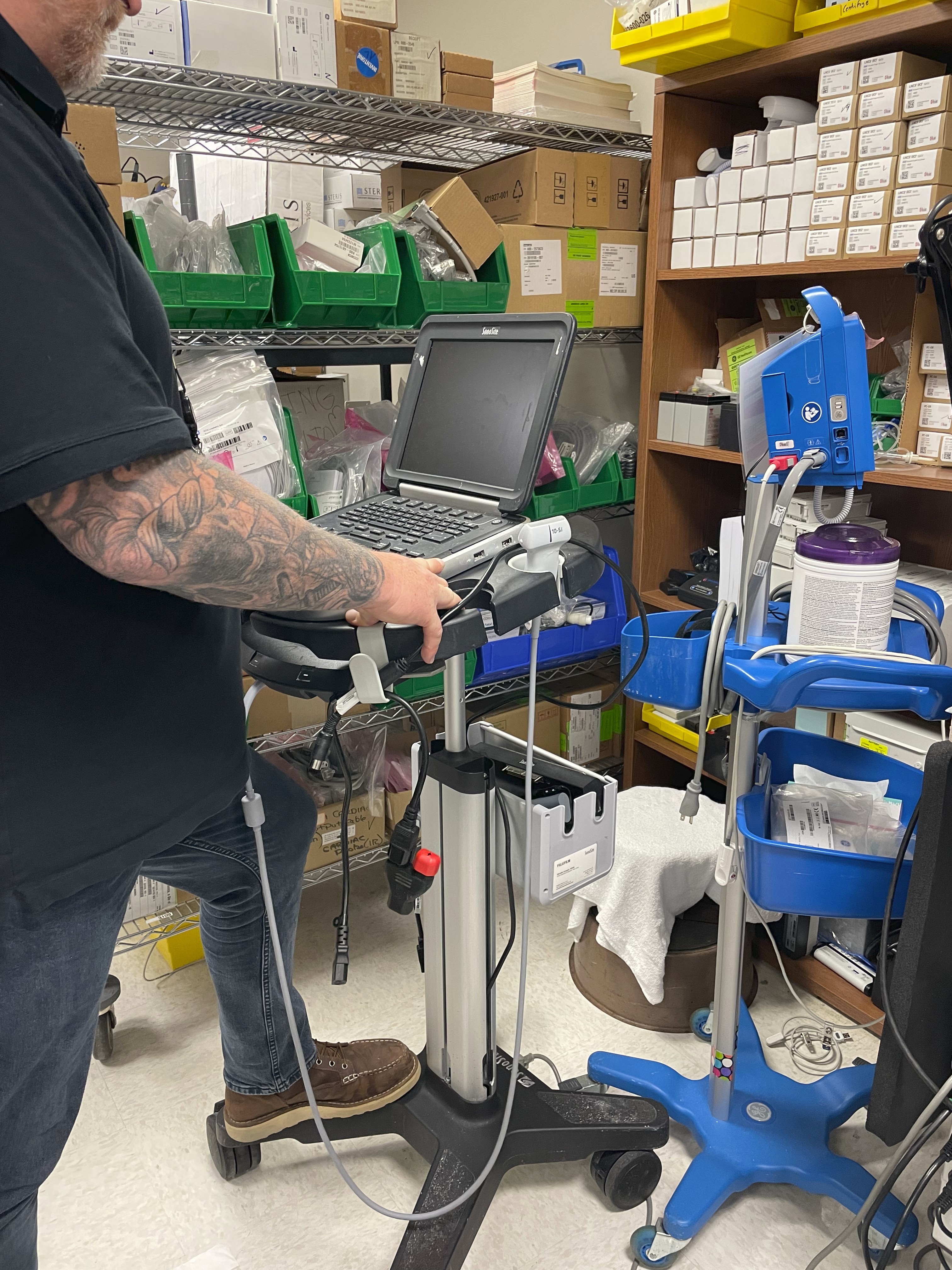
Hospital Shadowing
I shadowed field engineers as they repaired critical medical devices in hospital settings. Key observations included:
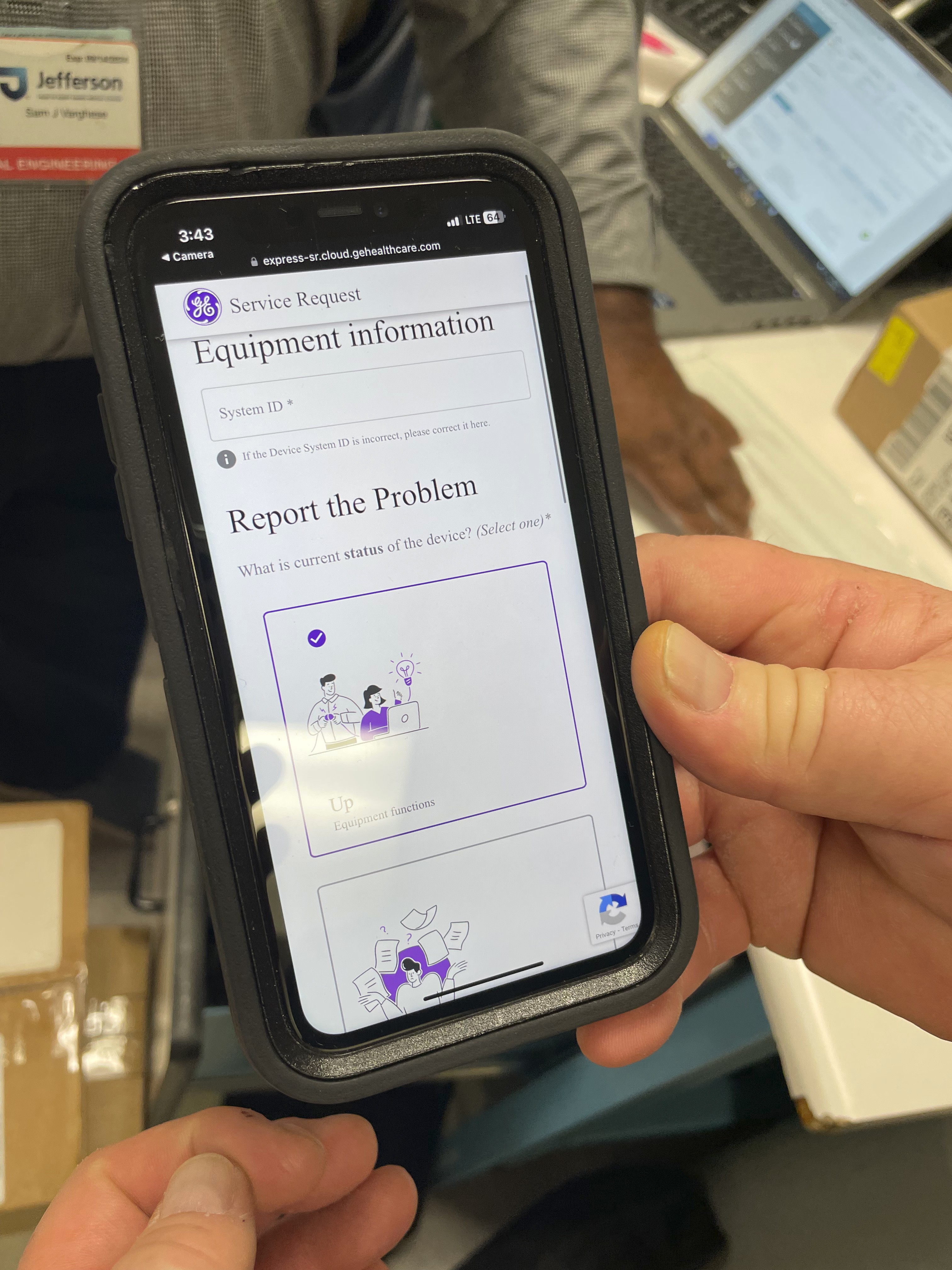
Wi-Fi Issues: Engineers frequently moved between areas with different Wi-Fi connectivity, causing data loss.
Physical Constraints: Working conditions often required one-handed mobile device operation.
Time pressure: Every minute of downtime meant delayed patient care
Information Sources: Engineers juggled multiple information sources simultaneously (device manuals, parts catalogs, service history).
Constant Interruptions: It was difficult for users to maintain focus on complex tasks.
Field Engineering Training
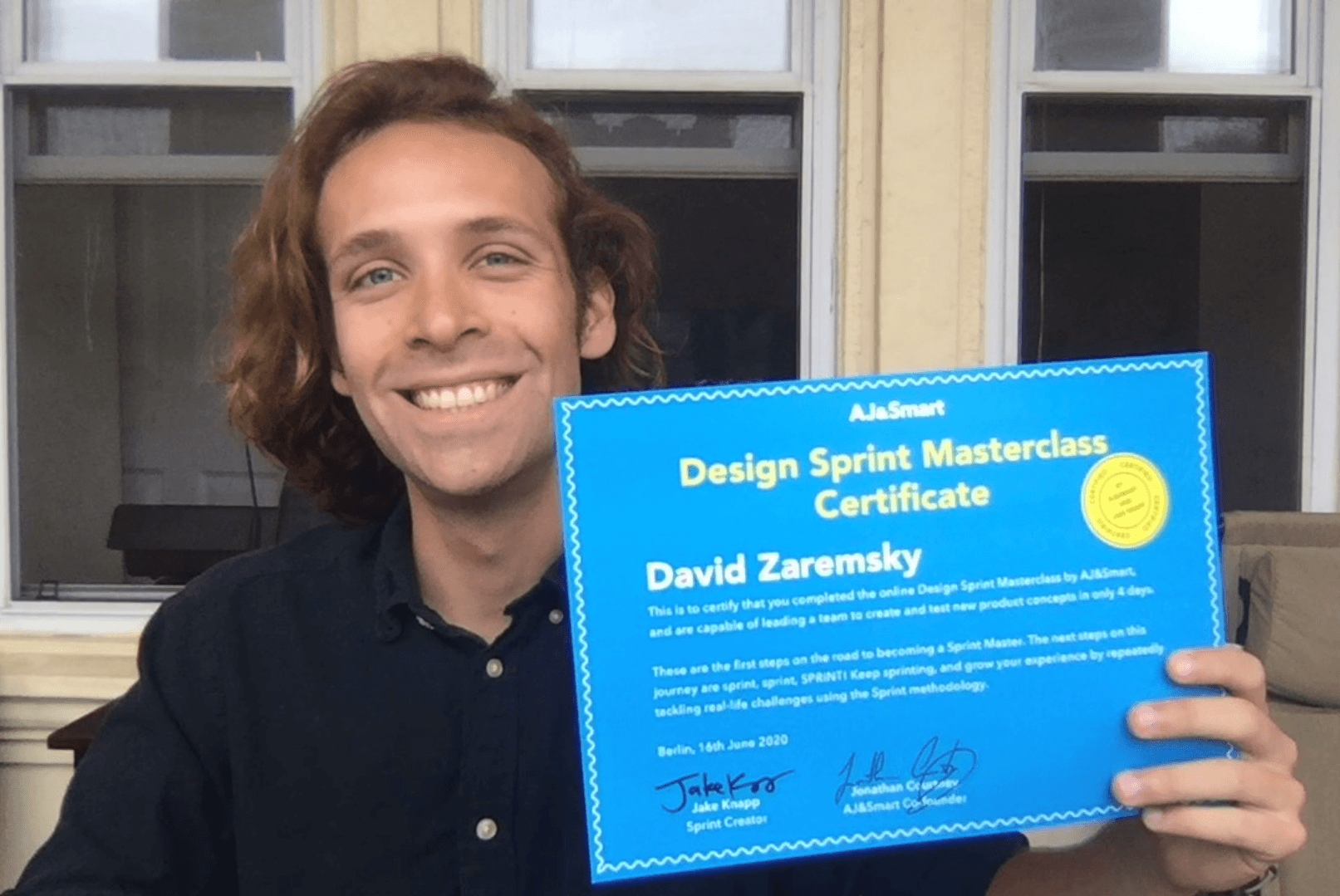
I completed field engineering training to understand the technical complexity of their work and build credibility with the user base. This training revealed:
The level of technical expertise required to diagnose and repair sophisticated medical equipment
Regulatory requirements that governed every step of their documentation process
Safety protocols that couldn't be compromised for efficiency gains
The mental models engineers used when approaching different types of repairs
Global User Interviews
I established a rigorous cadence of tri-weekly user-feedback sessions with active field engineers across different regions:
Domestic Pilot Call: Weekly sessions with domestic field engineers.
Regional Product Updates: Weekly sessions with heads of Japan, UK, France, Germany, Brazil, and Australia.
Individual Research Sessions: Worked with individual Field Engineers to test new ideas, understand complex workflows, and validate design decisions.
These culturally sensitive interview sessions uncovered regional variations in work patterns, customer expectations, and technical constraints that informed our multi-market design strategy.
Research-Driven Problem Definition
The research revealed that engineers were spending more time fighting the application than servicing critical medical equipment. I synthesized findings into clear personas and journey maps that highlighted the cost of poor UX in a mission-critical environment where hospitals depend on functional medical devices.
Key Research Findings:
Field engineers lost an average of 30 minutes per day to system inefficiencies
Data loss occurred in 15-20% of hospital visits due to connectivity transitions
Mobile adoption was below 10% despite 80% of work being conducted in the field
Engineers used external tools for basic tasks like quote generation, adding friction
Stress and frustration with the system put job satisfaction and retention at risk.
Collaborative Ideation and Prototyping
Using Miro for cross-functional ideation sessions, I facilitated design thinking workshops with product managers, developers, and regional stakeholders. I advocated for and led the transition from Sketch to Figma, enabling better collaboration and reducing design-to-development handoff friction.
All prototypes were created in Figma, with some live code delivered directly to developers to accelerate implementation of complex interactions.
Continuous Validation and Iteration
I established a rigorous testing framework to ensure designs met real user needs:
Tri-weekly User Sessions: Regular feedback sessions with active field engineers using the live system, rotating across different regions to capture diverse perspectives
A/B Testing: Validated modern UX patterns by comparing adoption rates and user performance metrics, demonstrating ROI for design decisions
Analytics-Driven Decisions: Used Google Analytics to identify unused features and optimize user flows based on actual behavior patterns
Regional Stakeholder Alignment: Worked with business leaders across multiple regions to ensure designs met diverse market needs while maintaining consistency
The Solution
Technical Architecture Decision
The most critical design decision was advocating for an offline-first native mobile application. This solved the data loss problem which cost engineers hours of rework and created compliance risks.
Design System Foundation
I created a scalable design system foundation that expanded from one to four applications (detailed in a separate design system case study):
FX2 SMAX & SIEBEL: Core field service applications with full component library
DX Dashboard: Analytics-focused subset emphasizing data visualization components
MyInstalls: Installation-specific workflows with specialized form components, popular stepped design integrated into FX2
Key UX Improvements Driven by Research
Streamlined Workflows: Reduced task completion time by 50% through elimination of unnecessary steps identified through shadowing and user sessions
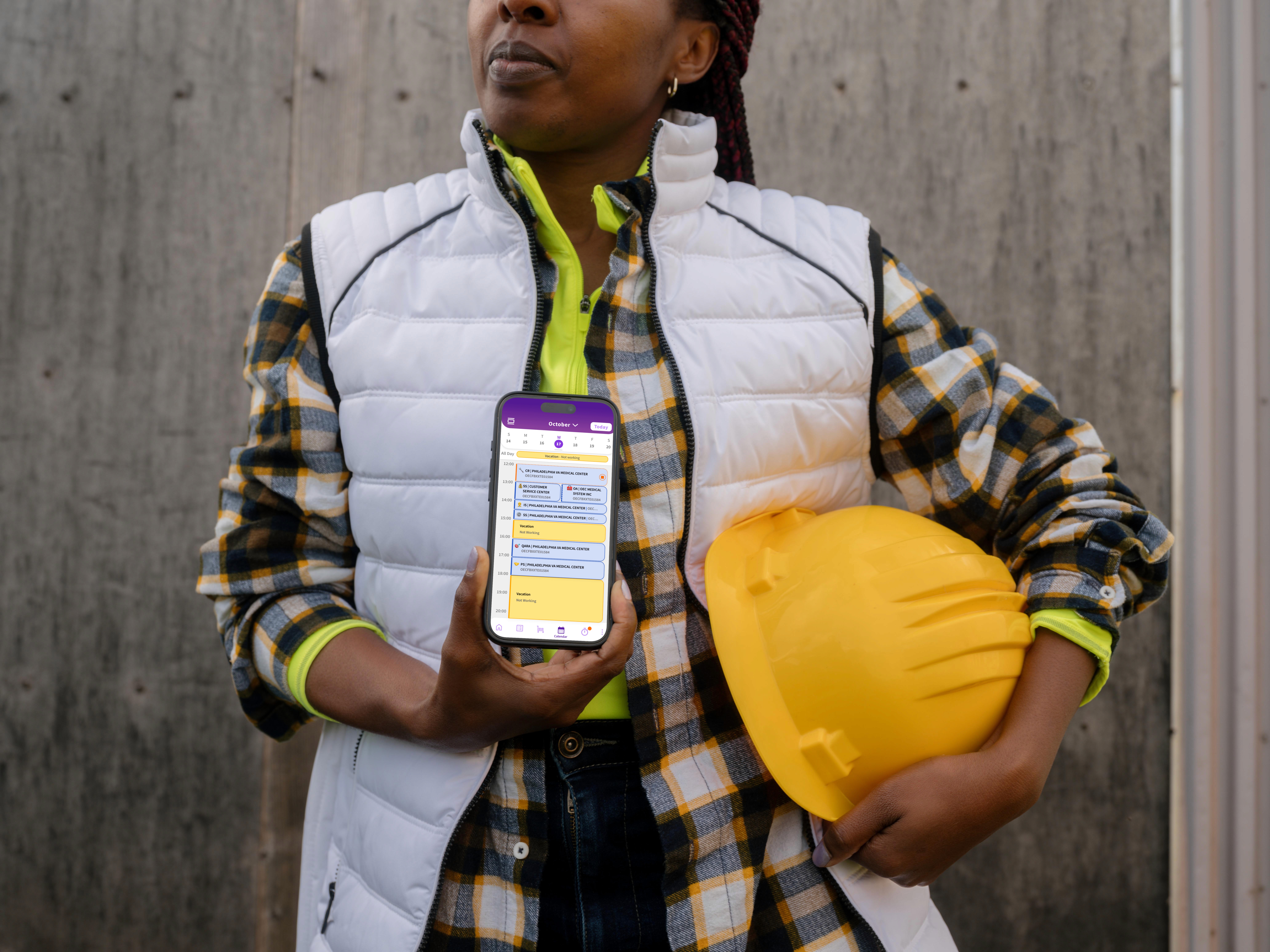
Mobile-Optimized Interface: Redesigned information architecture specifically for mobile-first usage patterns based on field observations
Offline-First Architecture: Implemented robust offline functionality preventing data loss during connectivity transitions
Integrated Quote Generation: Added missing functionality that eliminated need for external tools, directly addressing user requests.
The Impact
Quantitative Results
$1.5M annual savings through offline functionality and workflow optimization
82% mobile adoption across LATAM and EMEA regions (up from <10%)
8,000+ field engineers actively using the platform globally
50% reduction in task completion time
Improvements supported over $8 Billion in annual service revenue
Qualitative Impact
Eliminated data loss - engineers can now work confidently in any hospital environment
Improved job satisfaction - engineers can now focus on their core expertise rather than wrestling with software
Enhanced compliance - modern security standards and reliable data capture reduced regulatory risks
Global scalability - design accommodated multiple languages and regional requirements
Personal Growth
This project transformed my career trajectory from individual contributor to design leader. I learned to navigate complex stakeholder relationships, advocate for user needs at the executive level, and scale design operations across multiple teams and applications.
“…He quickly adapted to the role, engaging with stakeholders effectively and keeping discussions focused on project goals. David combines curiosity, creativity, and practical problem-solving to deliver user-centered designs. He would be a valuable asset to any team. ”
Anshu Sharma
Sr. Director | GE Healthcare
Conclusion
Key Findings
Field Research Is Irreplaceable: Hospital shadowing and field training provided insights that no amount of desk research could replicate. Seeing engineers struggle with connectivity issues in real hospital environments directly informed our offline-first architecture decision that saved millions.
Global Research Requires Cultural Sensitivity: Conducting research across US, Europe, Japan, and Latin America taught me that user needs vary by region. What worked in New Jersey hospitals didn't always translate to Tokyo or São Paulo. Building relationships with regional stakeholders was essential for gathering authentic insights.
Trust Your Instincts: I learned the importance of speaking up early when designs felt wrong, rather than deferring to others and dealing with inevitable rework. My field observations often contradicted stakeholder assumptions, and advocating for user needs based on first-hand research built my credibility.
Continuous Validation Prevents Costly Mistakes: Tri-weekly user sessions caught usability issues before they reached production. This investment in ongoing research saved significant development rework and ensured we were building the right solutions.
What I'd Do Differently
Advocate for a larger design team earlier and fight for a bigger seat at strategic decision-making table. I would also
invest more in mentoring my team members and
build stronger networks with designers outside the immediate team to accelerate learning and best practice sharing.
I would also
push for more frequent user research sessions during critical development phases, potentially embedding researchers directly with field engineering teams for extended periods.
Summary
This project demonstrates my ability to lead complex, global UX research initiatives that deliver measurable business impact while solving real user problems in highly regulated healthcare environments.